

Pack The Suitcases uses affiliate links. If you make a purchase through these links, I earn a commission at no extra cost to you. Thanks!
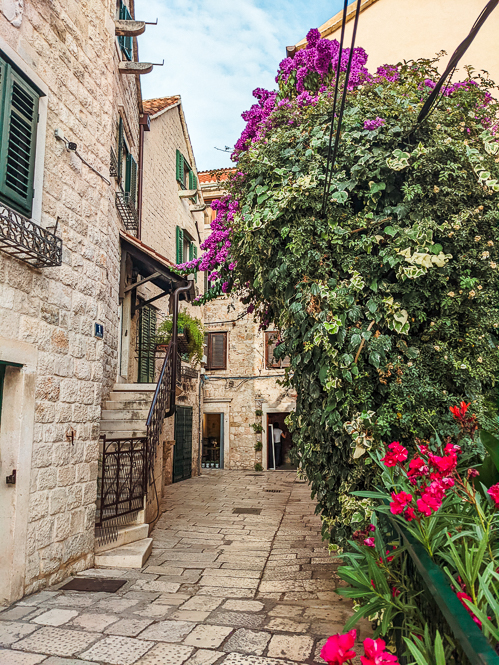
Here’s a perfect itinerary for spending 3 days in Split, Croatia’s second-biggest city. Split is located on the Dalmatian coast and is very popular with anyone wanting to fly into somewhere handy to get to some of the most beautiful Croatian islands. But it’s more than just a stopover to get the ferry to the islands. Split itself is worth staying in for a few days. The city is full of beautiful buildings and winding little streets, and its iconic palm-tree-lined promenade can be found on most Croatian postcards. As well as being so aesthetically pleasing, Split also has a thriving foodie scene, especially if you like seafood restaurants and Croatian wine, and a rich and interesting history going back to Roman times.
I’ve put together this itinerary for anyone wanting to make the most of a short break or a long weekend in Split. Despite having a lot going on, the city is relatively small. So I’d only advise doing longer if you want to do a few day trips. Otherwise, 3 days is a perfect length of time to spend there.
So settle down with a glass of Croatian rakija and enjoy picking what you like the look of for 3 days in Split…
3 days in Split itinerary: day 1
Do a (free) walking tour – the best way to start exploring
The best way to kick off your 3 days in Split is by getting a feel for the size and layout of the city through a walking tour. And of course, the best walking tours are always those free ones that you can find in most European cities.
The Free Spirit tour is my pick of the options in Split. I really enjoyed doing it (even in 40-degree heat!). It lasts 2 hours and goes around all of the main sights. You meet the group at 10am by the fountain in Park Josipa Jurja Strossmayera (Google Maps link) and it ends at the Riva promenade, which is dead handy for everything in the centre. Obviously it’s free, but it’s polite to leave the guide a tip at the end. About 10 to 20€ per person seemed to be what most people on my tour gave. Apart from Americans, of course, who always give more than the rest put together!
If the times of the free walking tours don’t work for you, there are also similar paid ones that may be better for you. I’ve found a good one for about 13€, which lasts an hour and a half and is really well rated.
Wander around the Diocletian’s Palace
After a walking tour, I like to wander back to the main sights so that I can explore them on my own a bit. And of course, spend ages trying to get a photo without anyone in it.
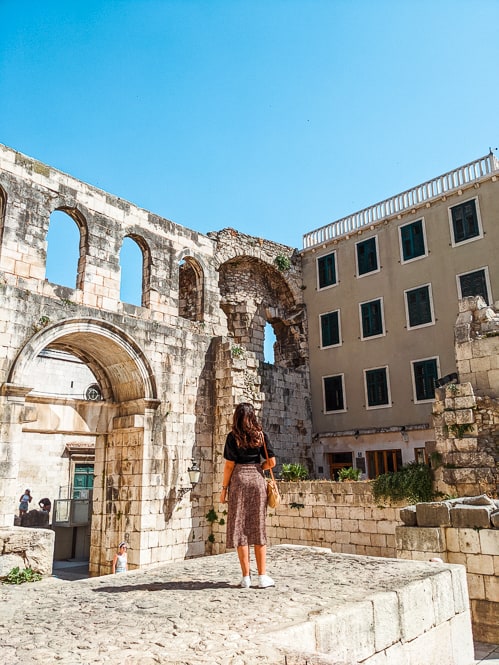
While in Split, you’ll probably want to explore the Diocletian’s Palace area properly. About half of the old town in Split used to be this whopping Roman palace and its grounds. It’s quite a weird thing to wrap your head around as you’re walking through the area because only some ruined parts of it remain and there’s so much hustle and bustle going on, so it’s not obvious where the palace began and ended. But if you look up, you’ll spot lots of arches and columns above the restaurants, bars and shops. It’s obviously been added to loads over the centuries, but originally the Roman emperor Diocletian had it built in 305AD ready for his retirement. He was probably thinking that a nice south-facing fortified palace on the coast would beat a pokey retirement home in Rome.
Each of the palace’s walls had an entrance with a distinctly metallic name: the Golden, Bronze, Iron and Silver Gates. No rose gold, sadly, but perhaps it wasn’t as on trend at the time. The main entrance today is the Bronze Gate, which used to be a trade entrance for unloading goods off ships because it opens onto the Riva (the promenade; more on that later).
Climb up the cathedral’s bell tower
With such a snazzy palace, Diocletian obviously had to have a cathedral to match.
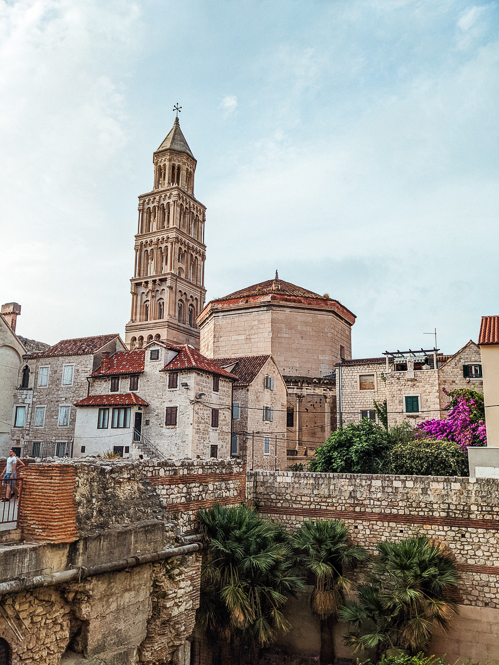
Apparently, St Domnius Cathedral is one of the best-preserved Roman buildings today. You can go into the cathedral to see the crypt and everything, but I didn’t find the interior that exciting (sorry to any keen cathedral lovers). I much preferred climbing up the bell tower for the view.
It was a case of mind over matter in 35-degree heat, though. It also lulls you into a false sense of security with decent stone stairs for the first bit and you think it’s going to be a breeze. But after a few seconds, these turn into metal ones that feel like they’re going to give way at any moment. Good times.
The view is worth it, though. And for me, visiting Split while Ultra Festival was on (a huge error), it was a nice chance to get away from the crowds (gangs of lads doing coke at 10am – joyous) and enjoy the city from above. You get a good panorama of Split, especially on a clear day. Tickets just for the bell tower are around 3.50€ each but there are various combined tickets if you want to see the other bits as well. You can buy the tickets at the base of the tower.
Have lunch at Fig – a must-do at some point in your 3 days in Split
After two hours of the walking tour and then climbing up all those steps in the bell tower, you’ve earned lunch.
Split has some excellent restaurants and cafés. But you do have to pick your way carefully through the more touristy rip-off places and do a bit of research first. It’s not somewhere you can just pick somewhere at random and hope for the best.
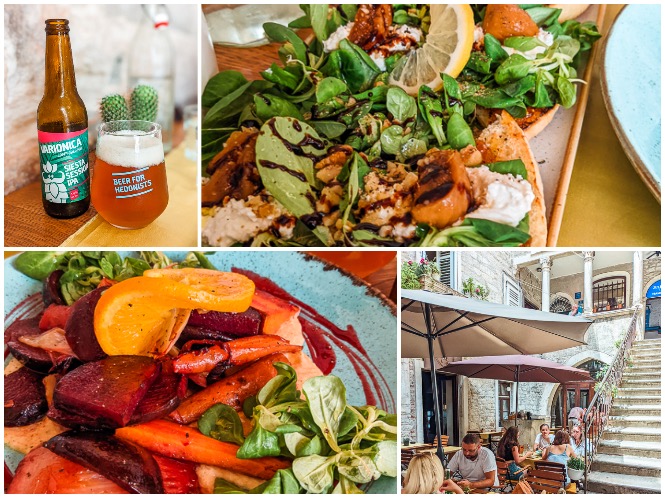
Luckily for you, I’ve done loads of research and even taste-testing for you. And I really recommend Fig (Google Maps location) for your first lunch in Split. Fig is bang in the middle of the Diocletian’s Palace, with seats both outside in a lovely floral courtyard or inside where there’s A/C. As nice as the courtyard is, the coolness inside is a winner in summer.
They do some gorgeous vegan and vegetarian options, and the portions are huge and well priced. The goat’s cheese, fig (of course!) and walnut flatbread is magnificent. Oh and they serve really good Croatian craft beer, which I’m sure you’ve earned too.
Stroll down the Riva promenade
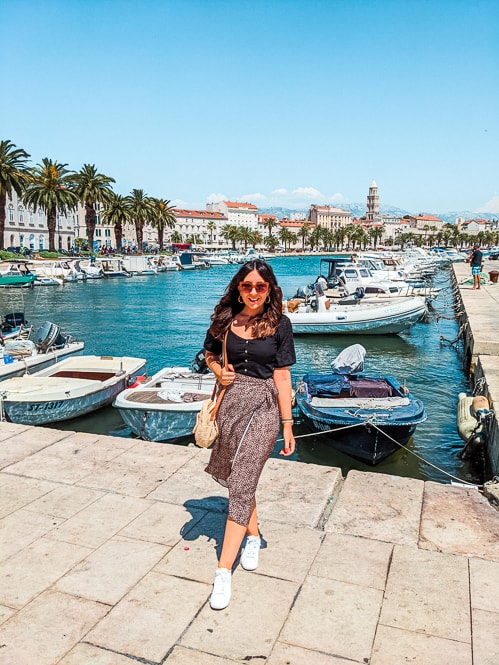
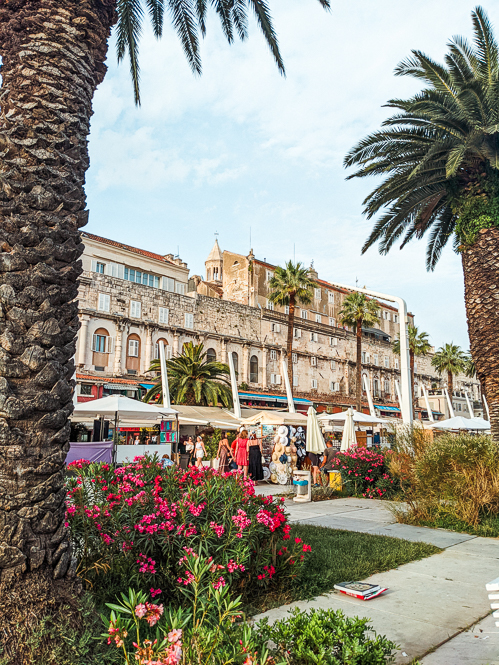
You’ll have seen the Riva on your walking tour, but it’s worth going back to take it all in properly. The promenade stretches along the seafront, lined by beautiful pink flowers and rows of pretty palm trees. It’s a good photo spot, although I was there in summer so it was tricky to get a shot without the crowds in it.
On the main walkway, there are lots of little market stalls selling souvenirs. As ever, some are a bit tacky and some good. Worth a browse, though. Nothing lured me in enough to make a purchase though, which is rare.
The Riva is slightly less intense than within the city walls on crowded and hot summer days because it’s quite open and has a bit more of a breeze. You can stop and have a sit on one of the many benches to watch the boats bobbing and people walking past.
Walk through the Trg Republike
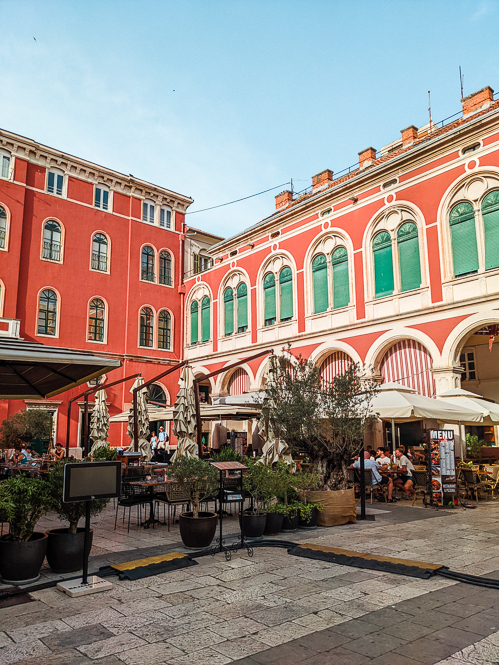
While you’re exploring Split, it’s worth pausing in Republic Square (Trg Republike). I thought it felt like being in a piazza in Venice (without the canals around it, obvs) due to all the elaborate and colourful buildings. These are called the Prokurative, which is also what many people know the square itself as.
It’s a popular site for cultural events, especially concerts and gigs. When there’s not something on, it’s still bustling with busy bars and restaurants.
Like most main squares in any city, it’s on the touristy side. My general rule is to never eat in a main square as they’re always a bit pricier, but it’s lovely to sit with a drink and enjoy the surroundings.
Rub the toe of the Grgur Ninski statue – an inevitable event in your Split itinerary
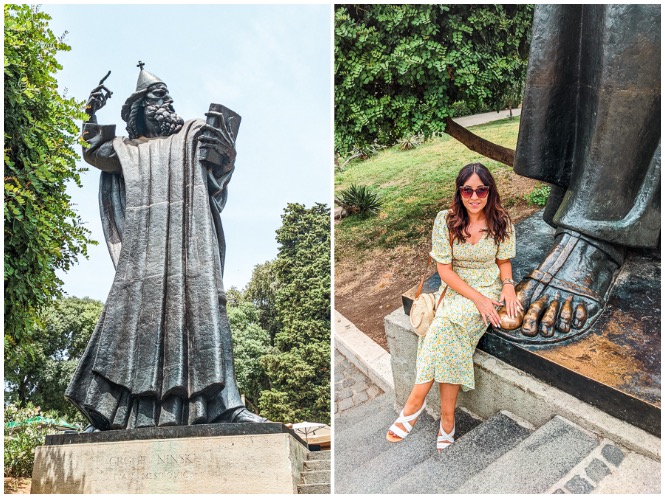
You haven’t properly visited Split until you’ve rubbed the big toe of the statue of Grgur Ninski (Gregory of Nin).
Gregory was the bishop in Nin, a small town near Zadar, from 900 to 929. He famously started doing his services in the Croatian language and script, which was a popular move and made Christianity stronger in Croatia at the time. The public loved him and so Gregory became the poster boy for ordinary people.
The sculptor Ivan Meštrović immortalised Gregory in this huge bronze statue. The big toe, which is the size of my head, is pretty much all you can reach to touch so is worn and shiny from everyone rubbing it. Like most statue-rubbing traditions around the world, it’s said to bring you luck. I can’t vouch for its reliability, I’m afraid. In fact, I’d say he sort of gave me instant bad luck because I tested positive for the ‘rona only a couple of days later and had to spend 10 horrendous days isolating in the world’s most disgusting apartment with no A/C in 44-degree heat, which then gave me heatstroke and I was the illest I’ve been in years. I’m sure Gregory and his toe didn’t cause this… but he didn’t ward it off, either. Thanks for that, Greg.
Walk up to the viewpoint(s) on Marjan Hill
Just when you thought you’d done enough walking, I’m now recommending that you haul yourself up a hill to see some spectacular views of the city. Soz. But it’s worth it.
At this point of the itinerary, it should be late afternoon. Depending on the time of year, you may be able to time being at the top of Marjan Hill as the sun begins to set, which is gorgeous. Don’t worry, it’s uphill but not a particularly strenuous walk and won’t take ages.
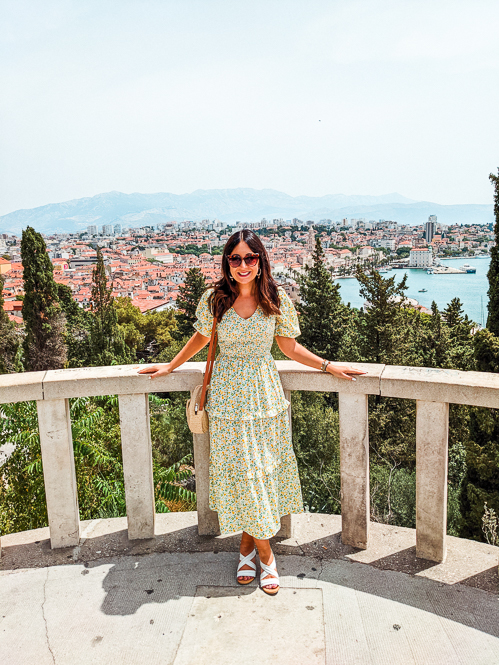
From the Riva, you can walk up to a bar called Teraca Vidilica (Google Maps link) in just over 10 minutes. This is the first viewing area and it’s mandatory to get a photo, of course. From there, you need to head up the path just behind the bar. This leads you very quickly to a small church. The route continues either up some stairs here, which take you up the hill past lots of viewing areas, or, if you don’t want to do the stairs, you can take a more gradual route up the path next to them. The stairs take just over 20 minutes. I’d recommend going up one and down the other so that you do the Marjan Hill walk as a loop rather than going back on yourself, which is always annoying.
Anyway, however you want to get up the hill, give yourself enough time to keep pausing and taking in the views on the way up. It’s too easy to focus on just getting to the top but a lot of other lovely views pop up on the way.
Once you do reach the top, it’s spectacular – sunset or not. And there’s a Croatian flag flying so you can have a photo with it to show you’ve conquered those stairs.
Evening meal and wine at Artičok, a restaurant with a beautiful rooftop terrace
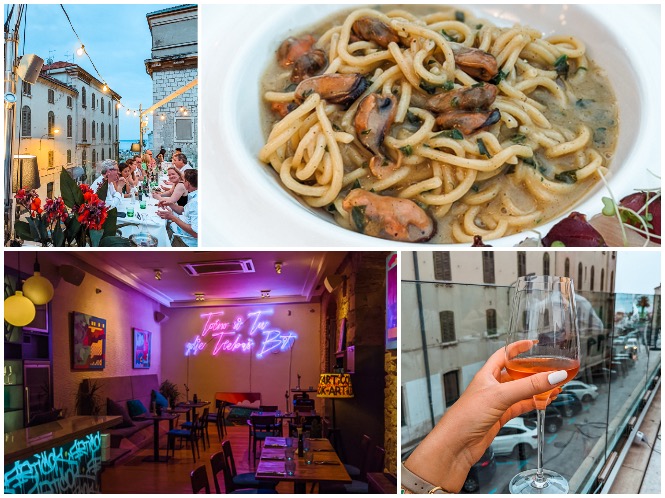
That’s enough walking for one day and probably enough steep stairs for a lifetime. But you’ll be well up for eating again at this point. I really recommend the gorgeous Artičok, which serves delicious food on a fairy-lights-lit rooftop terrace.
It’s right in the centre of Split so dead easy to get to (Google Maps link), but it’s a little bit off the main tourist drag. And it’s 100% not touristy tat. This is proper home-cooked, refined food. I had the smoked fish pasta, which was gorgeous. This was about 16€. This is about average for restaurants in Split; I don’t eat meat but that was probably more. However, everything is top quality and the setting is so beautiful.
It’s also a great place to try the wonderful Croatian wines that you’ll no doubt be seeing a lot of on your visit to Split. I really like orange wine, which you only really see in places like Croatia and Slovenia. If it’s on the menu, give it a go. Let me know what you think in the comments. Just don’t hold me responsible for any headaches the next day.
After your meal, you could head into any of the bars en route back to wherever you’re staying. Or if you’re anything like I was, you’ll just want to collapse into bed. Tell me you’re getting old without telling me you’re getting old…
3 days in Split itinerary: day 2
Browse the stalls at the Pazar market in the morning
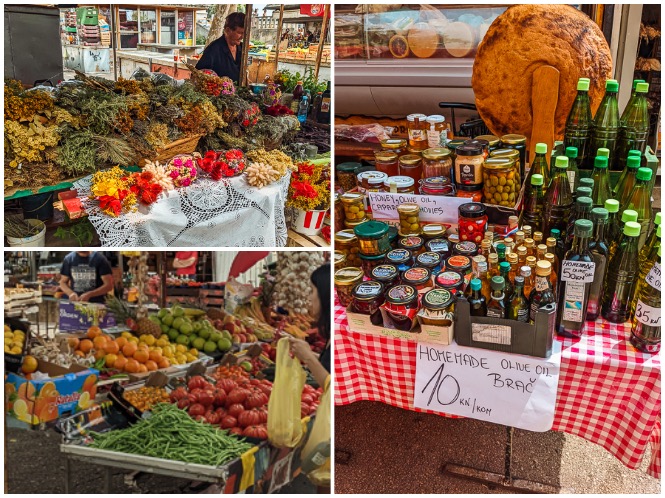
Split’s main open-air market, known as ‘Pazar’ by locals but often referred to as the ‘green market’ in guidebooks, is just by the east wall of the palace.
It’s one of the best places in Split to get a sense of local life. You’ll see plenty of locals, including café owners, shopping for their fruit and veg, having a chat (or a haggle) with the stall owners, and generally going about their lives.
It’s a great atmosphere and a good place to have a morning walk and a browse. Pick up a jar of homemade jam/honey or a bottle of olive oil to take home. I love buying something food-based (as long as it has no risk of leakage in the suitcase!) because it reminds me of the trip every time we use it in the kitchen.
The market opens at 6.30am and runs all day. But it’s best to get there in the morning before they sell out of things and it quietens down.
Visit the excellent Museum of Fine Arts
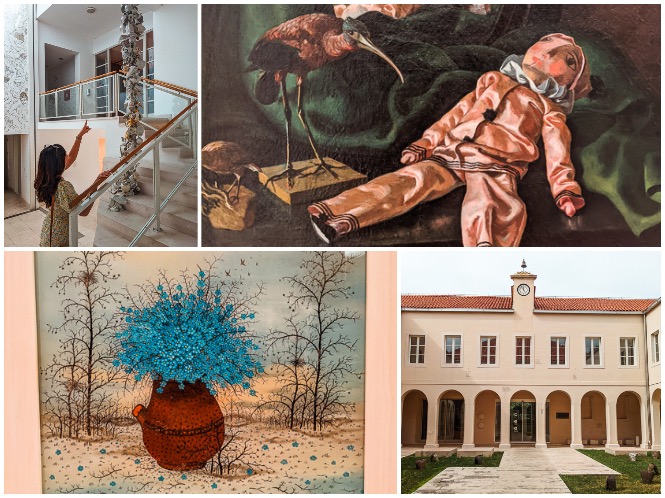
I love an art museum day on my travels as I’m quite into art, especially discovering lesser-known artists local to wherever I’m exploring. The Museum of Fine Arts in Split really delivers on this front. It has some brilliant pieces by Croatian artists, including a tower of teapots as you go in by the stairs. Being an avid tea drinker, this was right up my street.
It’s got works from the 14th century to the present day so you get a sense of the country’s history through art. One of the few artists I recognised immediately was Egon Schiele; anyone who did A-level Art in the UK will probably have studied him a bit. Look out for works by Emanuel Vidovic too, who was from Split.
Anyway, the museum is very interesting and entertaining. It’s also set in a gorgeous building, a restored old hospital. I bet it’s haunted and wouldn’t like to visit at night. But by day it’s just a beautiful setting. It also has A/C, which is much welcome in summer.
It’s 5€ish to get in. Check the opening times before you go on the official Museum of Fine Arts site; they do vary depending on the time of year. I love Croatian art, having visited quite a few galleries and museums around the country now. If you enjoy this museum in Split and you also go to Zagreb while you’re in Croatia, there’s an excellent Gallery of Naive Art that you’ll love too. I mention it in my guide to Zagreb. Top tip there!
Eat lunch at beautiful Bokeria, with obligatory Aperol Spritz
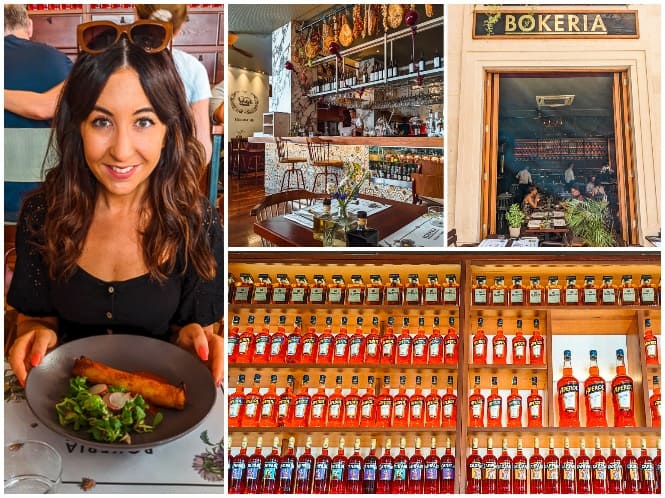
I spotted Bokeria Kitchen & Wine on my first day of spending two weeks in Split when I was getting a sense of the place and generally doing research for this 3 days in Split itinerary. As soon as I saw the building, with its beautiful floor-to-ceiling arched windows with seating in them, opening out onto a bustling little street in the old town, I knew it’d be a good’un. And it is.
Once I walked in and saw their ENTIRE WALL of bottles of Aperol, I was very happy with my decision.
The food is Mediterranean/European but with a Dalmatian touch. It has an all-day menu but the portions are more what you’d need in the evening. If you’re just after a lunch-sized portion, I’d suggest getting a couple of starters to share, with their lovely homemade bread on the side. The cod spring roll is a must.
Although the food is not the cheapest, at around 17€ for a veggie main, it’s a nice experience and if you go for lunch and get starters, it’s fine. The setting is beautiful. Whoever did the interior design absolutely nailed it (with the Aperol wall being the pièce de résistance).
Have a leisurely afternoon in beautiful nature: Marjan Park
After lunch, head to Marjan Park for a relaxing afternoon in beautiful coastal pine forests. This is a different bit from Marjan Hill so don’t worry, you don’t have to do ANY stairs.
The best way to do Marjan Park is to get bus number 12 from the Church of St Francis in the town centre to the roundabout (Google Maps link) by Kupalište Bene. It’s only about 20 minutes on the bus and costs around 1.60€ each way. You can buy the ticket on board. Buses run every 15 minutes or so but do check the times on the official site.
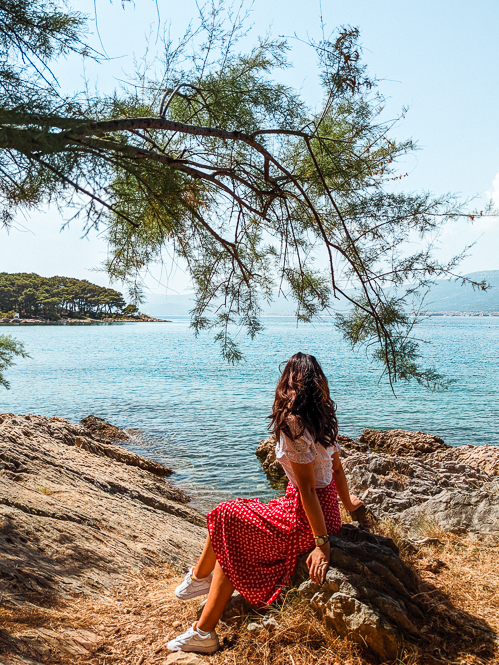
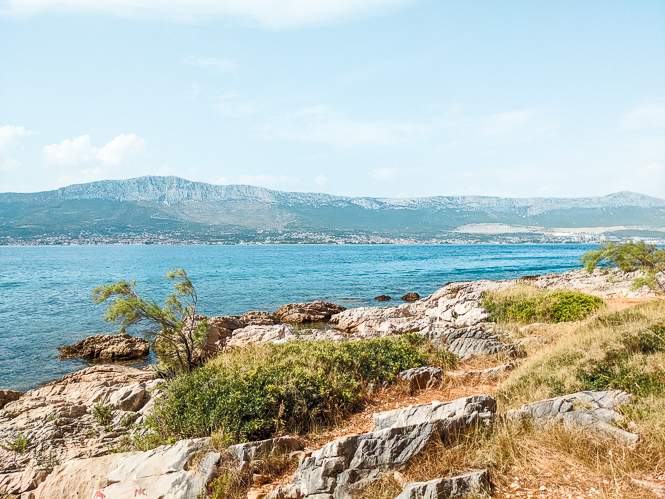
From where you’re dropped off, walk to Lubinski Porat beach to enjoy its peaceful charm. I loved it there as I had it almost to myself and managed to find a secluded cove nearby. This opened out onto turquoise waters with a view of the hills on the other side of Kastela Bay. Idyllic. Well, apart from the mosquitos. Make sure you’re roughly 80% mosquito spray before you head to Marjan Park (or indeed anywhere in Croatia in summer, TBH).
Then head back on yourself to Kupalište Bene. This is a little rocky beach with a bar next to it. I can’t swim but it seems popular with locals for that, so if that’s your thing then you might want to bring your cozzie. But it’s also perfect for a sit in the shade of the pine trees with a cup of tea. Just note that the café/bar at Kupalište Bene is fine for a drink but I wouldn’t eat there… The reviews speak for themselves.
After a drink, follow the coast to Kasjuni beach (a 40-minute walk). Enjoy pausing at any pretty spots you see en route. Kasjuni beach is larger than the others and more geared towards sunbathers and screaming kids. However, if you’re visiting out of season and get it on a quiet day, it could be great as the scenery is lovely. You can get the bus back into town from Kasjuni or it’s an easy downhill walk (another 40 minutes).
Treat yourself to an ice cream from Hajduk
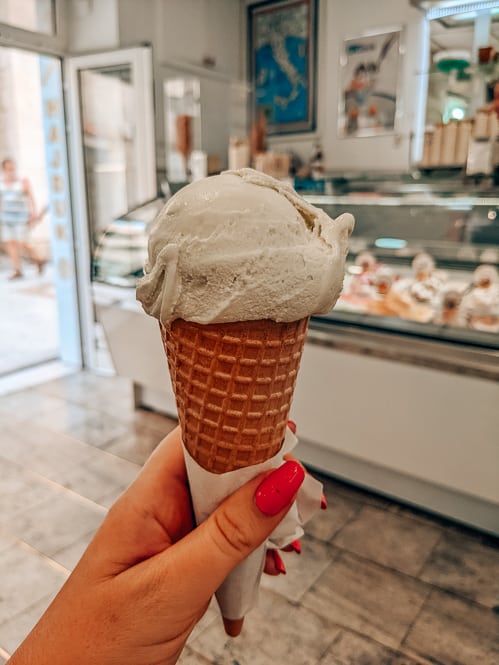
Any trip is incomplete without an ice cream at some point. Make sure you leave time in your jam-packed Split itinerary to get one.
There are LOADS of ice cream shops in the old town, and – as you can imagine – some are not great and are aimed mostly at overcharging tourists. I did a lot of research while I spent 2 weeks in Split, sampling quite a few of them in order to find the best. It’s a hard job but someone has to do it.
I recommend three places in Split for ice cream/gelato:
- Ela’s Icecream & More (Google Maps link). This does the best vegan ice cream in Split: a thick and creamy chocolate flavour. Worth trying even if you don’t follow a plant-based diet; it reminded me of the best vegan ice cream I’ve ever had (in Tavira, Portugal, if you’re interested).
- Sladoledarnica Hajduk (Google Maps link). This is slightly off the beaten path and popular with locals. One scoop is just over 1€, which is much cheaper than other places and it’s still nice ice cream.
- Sladoledarnica Emiliana (Google Maps link). Finally, it’s worth going here just for the delicious and unusual flavours. Lemon and lavender or ricotta and fig are popular ones.
Note that ice cream shops in Split are almost always cash only. And on a hot day, you may have to queue.
Evening meal at the most beautiful restaurant in Split: Restoran Perivoj
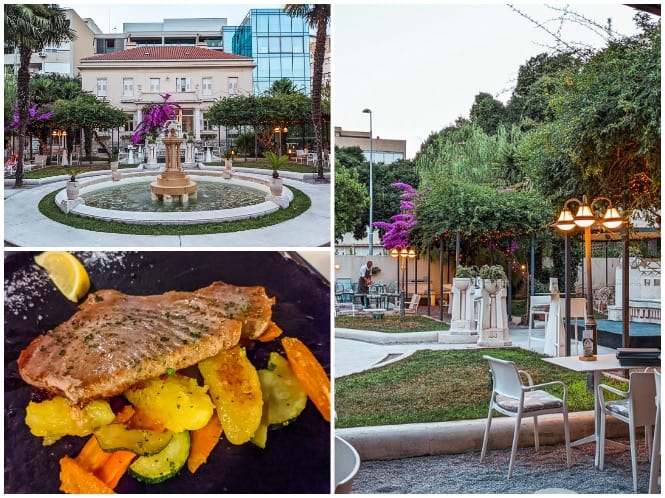
For the second evening meal of your 3 days in Split, I wanted to include the spectacular Restoran Perivoj. This has to be the best setting in Split, if not one of the most beautiful in the whole of Croatia.
Restoran Perivoj is a stunning Art Noveau villa with beautifully decorated rooms, but it’s best if you can eat outside. The outdoor tables are in this amazing Mediterranean garden full of purple bougainvillaea flowers and fairy lights. There’s a big central fountain trickling away and you wouldn’t know you’re right by a big shopping centre and all the madness of the city. It’s a very special place.
Luckily, it isn’t style over substance as the food is spot on too. The portions are big and everything is fresh and tasty. I had the tuna steak, which was probably the most expensive meal I had in Split at about 20€, but it was memorable and worth it. The staff were lovely too. Our food was a bit delayed and the waiter brought us some local craft beer and wine for free while we waited. As I’d just been in Portugal for two months (home of slow service!), I’d not even noticed that it was delayed. So I was chuffed with the free drink.
Perivoj is also a popular wedding venue, so it’s worth booking a table so that you know it’s not shut for a wedding.
3 days in Split itinerary: day 3
Do a day trip from Split
As you’ve got 3 days in Split and you’ve spent the first 2 exploring just within the city, I thought it’d be nice to do a day trip on the last day. There are a few you can do quite easily by bus/coach, but I’d recommend either of these two. You may also want to explore further afield and stay overnight on one of the many Croatian islands, if you fancy extending your trip further.
Šolta island
The untouristy little island of Šolta (pronounced sholta) is a fantastic day trip from Split if you want to escape the crowds. It’s a bit of a hidden gem. Šolta is a tranquil, hilly place full of attractive sheltered coves. There isn’t loads to do there but that’s the beauty of it. The island is rightly proud of its wine, olive oil and honey, all of which you can try in friendly little restaurants full of locals. Lovely stuff.
- The journey from Split to Šolta takes an hour on the Jadrolinija ferry. This is more than the 30 minutes it takes on the catamaran but having done my research, the times for the ferries are much better for a day trip. You don’t want to be clock-watching and having to rush back.
- Local buses meet each ferry as it comes into Šolta’s main port in Rognac. They then go off on a circuit of all the major villages so you can get off where you fancy. For a day trip, you’re best off seeing Stomorska and/or Maslinica.
Trogir
The UNESCO World Heritage town of Trogir is on a little island connected to the mainland by a short bridge. It’s known for its magnificent St Lawrence Cathedral but also has a beautiful Venetian old town. On a day trip from Split, you can enjoy a drink on the waterfront, climb up the cathedral’s bell tower and visit the 15th-century castle.
- The journey from Split to Trogir takes either 30 minutes on the intercity coach (4€) or 45 minutes on the local bus #37 (2.60€). The question is whether you want to pay that bit more to have A/C on the coach. Both options will deposit you in the centre of Trogir.
- You can also do a lovely river journey back to Split by boat. This runs a few times a day; check the times on the Bura Line site.
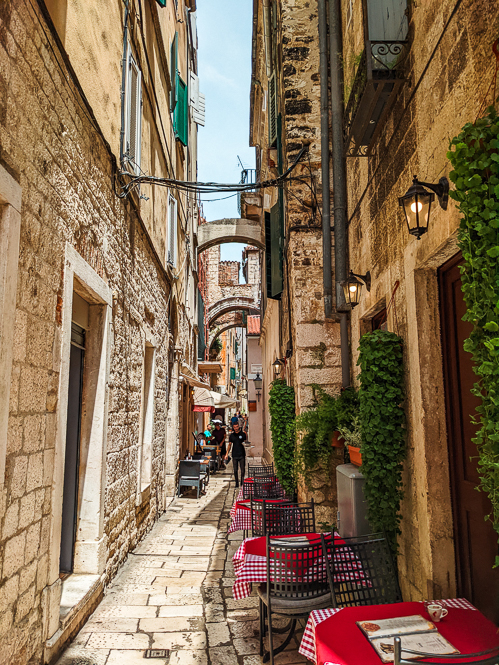
3 days in Split itinerary – useful information for your trip
How to get to Split
Getting to Split is easy as it’s a well-connected city. The airport has plenty of shuttle buses going into Split, a journey of about 30 minutes (6€). Or if you’re arriving by bus, train or ferry, the stations and port are next door to each other and only a short walk into the old town.
Where to stay in Split
Split has a lot of accommodation but some of the prices in the old town are eye-watering. After hours of research, I managed to get a few good options. Here are a few hotels and apartments I’d look into. All prices are correct at the time of writing.
- Heritage Hotel FERMAI MGallery Split – This swanky hotel is a real beauty if you want to treat yourself a bit. I love the interior design: right up my street. Unsurprisingly, it’s about 240€ a night, so probably one for a special trip like a birthday etc.
- Caldo Luxury Rooms – For about 117€ a night, this pretty apartment is a really good mid-range option.
- Rooms Lejletul – With a great location and decor, I was impressed that this apartment was only about 79€ a night.
- Apartment Tonis – This is one of the places I stayed on my recent trip to Split. It’s a lovely apartment (with great A/C) and only 80€ a night. The location couldn’t be better, either.
How to get around Split
Everything is walkable in the centre and old town area. For getting slightly further afield or doing day trips, there’s a decent bus service: Promet Split.
When to go to Split
Not summer! I visited in June and had a rubbish time overall. The weather was unbearably hot at 44 degrees. Split was also ridiculously crowded to the point it was impossible to walk down some of the streets without queuing first. This was partly due to the Ultra Festival being on, making the city full of coked-up groups of festival-goers and spoiling the atmosphere.
So I really recommend checking the dates for that each year and avoiding it as it brings so much more footfall into the city. And I’d recommend avoiding June and most of summer – I was forced into visiting then due to Schengen days – thanks, Brexit.
Spring and autumn would be much better and I’ve heard from others who’ve been to Split that it’s much quieter then – I probably would have had a much better time. I really love Croatia in May or October as it tends to be not too hot, but warm enough to wear dresses and walk around without a coat. And of course, it’s far less busy.
Save and share: 3 days in Split itinerary
If you enjoyed this blog post on how to spend 3 days in Split, Croatia, why not pin it to your Pinterest board?
You might also like my other Croatia and Central Europe posts:
- One day in Zagreb: a perfect itinerary
- 30 things to do in Zagreb, Croatia
- 20 things to do on Korcula, Croatia’s most beautiful island
- 33 things to do in Ljubljana, Slovenia’s fairytale capital
- One day in Bratislava, Slovakia: the perfect itinerary
- 3 days in Dubrovnik: an itinerary [coming soon].
If you’ve used one of my travel guides and enjoyed it, you can also buy me a drink. Cheers.

7 Comments
Brilliant Caroline- I will certainly use this when I visit next summer
Hope you have a good time – a better one than me, anyway! x
Great blog. I adore Split – we spent a fortnight there (with lots of day trips out – Omis & Klis Castle are good additions to those you mentioned) We had been before when we had a week in Trogir (and also briefly in the evening on the way to Bol on Brac) A lovely city well worth exploring – and I agree re Croatian art – some great stuff!
It’s good to hear someone adores it! It didn’t go well for me with heatstroke (44 degrees!), getting covid, the city being full of coked-up people off to Ultra Festival, and having to isolate in a vile apartment haha. I love Croatia overall though. I doubt I’ll ever go back to Split after my rubbish 2 weeks there but hopefully I got enough info to provide a decent itinerary 🙂
Oh dear – that would definitely put a different perspective on it!
Just stumbled across this to plan a trip this summer and this is a really useful and great guide – I love the way you write and your authenticity!
Excellent article for a multi-day tour of Croatia, with a multitude of options and easy to understand. My congratulations.