
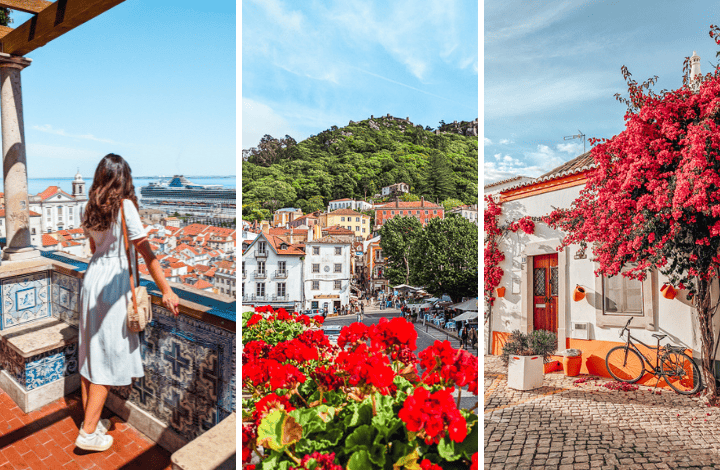
Pack The Suitcases uses affiliate links. If you make a purchase through these links, I earn a commission at no extra cost to you. Thanks!
Here are some of the best cities to visit in Portugal (and some towns too), from the big hitters to the relatively unknown. Having spent 3 months travelling around the country recently, I wanted to share my love for some of the many gems I’ve discovered. Portugal will always be one of my favourite European countries. It has excellent food and drink, varied landscapes from dramatic mountains to breathtaking coastlines, and some of the friendliest locals you could wish for. It’s also much more affordable to visit than some European cities, which is a bonus.
In order to make this a more comprehensive guide to Portuguese towns and cities, I wanted to include places I’ve not yet been to or that I’ve been to too briefly to be knowledgeable about. So to help me out, I roped in some other travel bloggers to give me their recommendations for their favourite towns and cities in Portugal. A big ‘thank you’ to these other bloggers because I now have this absolutely huge guide! Of course, I now need to go back to Portugal and visit all the towns/cities I’ve not yet done…
Anyway, whether you’re on the hunt for a bustling city break or a seaside town escape, I reckon you’ll find a town or city in Portugal that takes your fancy out of these. Let’s get planning…
The best cities and towns to visit in Portugal: my tips
Funchal
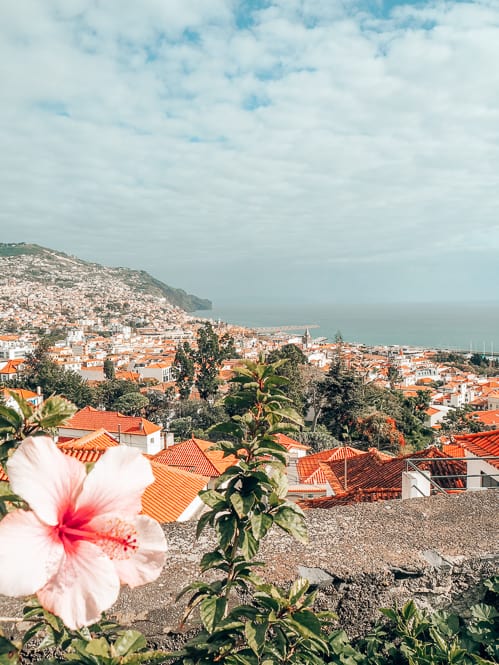
Funchal, the capital of the beautiful island of Madeira, is not as well known as some places on mainland Portugal. But I’ve been there numerous times and become a bit of an expert on it over the last decade. And I think I’m qualified to say that it’s one of the most beautiful and best cities in Portugal. Plus it’s also my very favourite place ever.
Funchal has its share of tourists, but it’s a proper city with a university and plenty of places aimed at locals. There’s loads going on. You’ll find the most amazing food and drink, plenty of art and sights to see, and a great selection of cute independent shops to browse. And due to Madeira’s warm but damp climate, it’s one of the lushest and most floral places in Portugal. Flowers are everywhere and there are three botanic gardens within easy reach of the centre of town. The dream.
If all this sounds up your street, have a look at my huge detailed guide to things to do in Funchal, Madeira. It covers everything you need to know as a starting point. And then you can move on to the best restaurants in Funchal, the best bars in Funchal and all my other Funchal/Madeira guides. I told you I was a bit of a Madeira geek…
Looking for where to stay in Funchal? I recommend Quinta Sao Goncalo, Quinta B, Apartments Madeira Old Town or Three House Hotel.
Lisbon
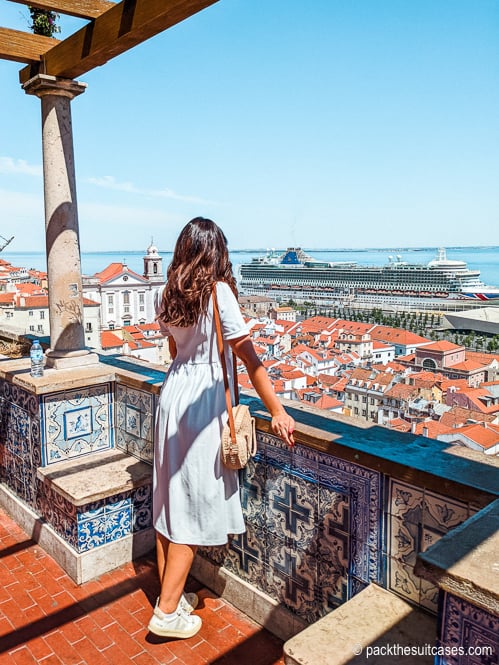
Well, it wouldn’t be a very good guide to the best cities to visit in Portugal if I didn’t include the ever-popular capital. I know Lisbon fairly well now after recently staying there for just over a month, so I can give you some good tips.
Lisbon is a beguiling city. Colourful, tiled streets lead up and down its many (MANY) hills, against a backdrop of the beautiful Tagus River. Tourists from all over the world flock to try the famous pastel de nata in nearby Belem. You can ride the iconic yellow trams by day and party in the vibrant Bairro Alto district by night. There’s always something new to see, do or eat even if you’ve visited many times before. It’s also surprisingly laid back for a European capital and I adore it. If this all sounds like your cup of tea, have a look at my huge detailed guide to Lisbon. It gives you a full itinerary, including restaurants, where to stay, museums and day trips.
Looking for where to stay in Lisbon? I recommend Santos Apartment with Patio, the Empire Lisbon Hotel and Jardim da Lapa by Shiadu.
Porto – one of the best cities to visit in Portugal for first-time visitors
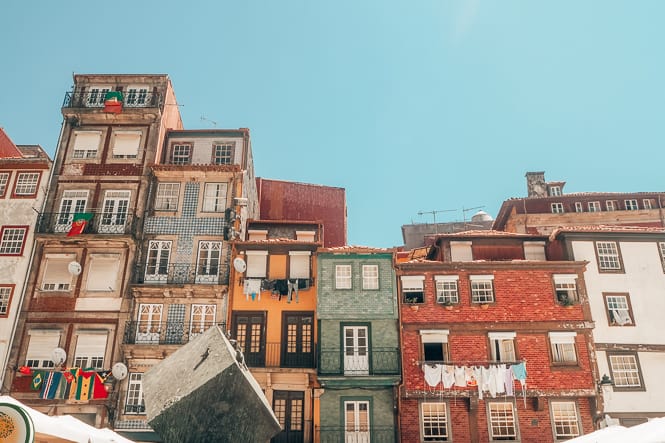
Porto is Portugal’s second-largest city and an absolute underrated gem. I’ve loved this stunning city for years now and recently stayed there for a few weeks to see what had changed since my last visit a couple of years ago. It continues to get better. Porto’s riverbanks are overflowing with independent shops, hip bars, cute cafés and unusual restaurants.
You’re never too far from a sneaky peek of the dazzling Douro River from any of the bunting-strewn streets that lead down to the water. Porto is just a real photographer’s paradise. And it’s near the sea, so you can get a historic tram down to one of the city beaches and enjoy views of the Atlantic. If all this is tempting you, have a look at my huge detailed guide to Porto, which will give you a full itinerary for visiting. It’s got all my tips for where to eat, what to do and where to stay. Oh and I also have a guide to some easy day trips from Porto by train and bus because if you’re there more than a few days then it would be a crime not to get to some more gorgeous towns and cities in Portugal nearby.
Looking for where to stay in Porto? I recommend PortoBay Flores, The Editory House Ribeira Porto Hotel and Acta The Avenue.
Tavira
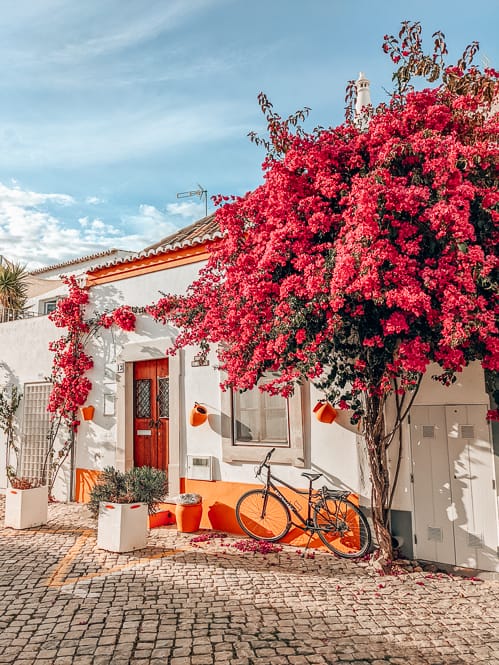
After spending a month there last year, Tavira quickly became one of my favourite towns/small cities to visit in Portugal. I’ve recommended it to so many people now. It’s totally unlike some of the tourist-orientated and tacky areas that you might think of in the Algarve.
Tavira is set on the banks of the Gilão River, with classic Portuguese whitewashed buildings and those iconic terracotta-tiled rooftops. It’s incredibly pretty, perfect for mooching around and relaxing but also packed with stuff to see and do, including museums, galleries and quaint independent shops to browse. The town is nicely bustling with good bars and an atmosphere at night, too. And it’s on a great little coastal train line so you can do loads of good day trips without the stress of hiring a car. Bliss. If Tavira is tempting you, have a look at my large guide to things to do in Tavira. I also have a handy (and huge) guide to restaurants in Tavira. There’s a plethora of excellent cafés and restaurants where you can find the best Algarvian food and drinks.
Looking for where to stay in Tavira? I recommend Casa Cristina or Casa Oliverio, Pousada Convento de Tavira and Authentic Tavira Hotel.
Faro – one of the most underrated cities to visit in Portugal
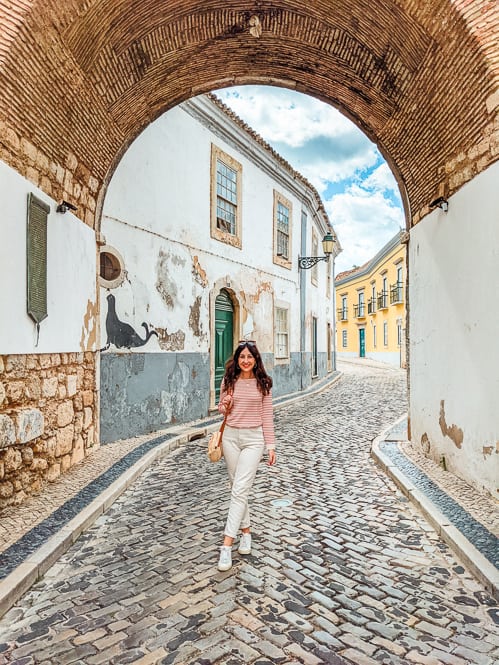
Sticking with the Algarve, I have a soft spot for Faro, the underrated and colourful capital of the region. Most visitors to the Algarve will fly into Faro but bypass the city itself, heading to other places around the coast. But they’re missing out.
As lovely as other towns in the area are, Faro definitely has its own charms and shouldn’t be missed. It’s a decent-sized city, packed with brilliant spots to eat, including lots of vegan restaurants and cafés. It has a pretty old town full of cobbled streets and fragrant orange trees. It’s got chic tiled boulevards lined with nice independent shops. And most importantly, it’s on the same coastal train line as Tavira. So it’s another good base for exploring the Algarve without a car. If you’re considering a visit, have a look at my large guide to things to do in Faro. It covers food, drink, hotels and more.
Looking for where to stay in Faro? I recommend Faro Clara Suites, 3HB Faro and Casa Apollo Guesthouse.
Braga
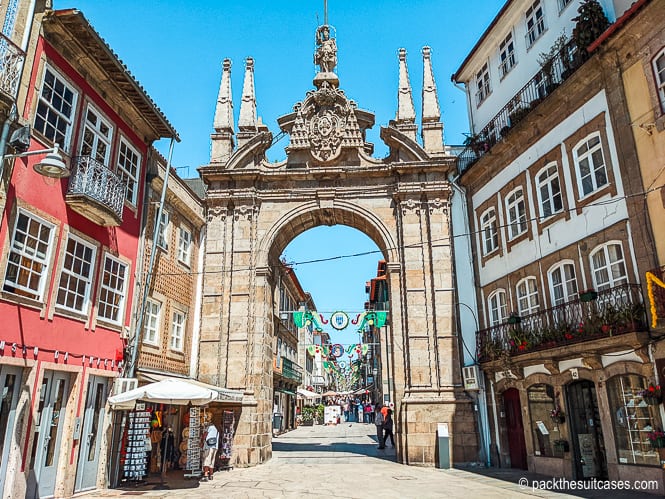
One of my favourite lesser-visited cities in Portugal is the lovely Braga. It’s doable as a day trip from Porto but is worth staying a bit longer. A weekend there would be dreamy.
Tourists flock to the impressive Bom Jesus do Monte, a hilltop church reached by funicular railway, just to the east of the city. But my favourite spot in Braga is the Jardim de Santa Bárbara, a garden in a medieval palace courtyard bursting with flowers. Also visit the bright blue tiled Palácio do Rai, which couldn’t look more Portuguese if it tried. Look out for a boutique on the corner next to it, Lanidor Women. I bought a nice blouse there!
Braga is a university city, which means it has a good atmosphere and decent restaurants/bars as well as all the historic and cultural attractions. Head to Retrokitchen for an insanely cheap and delicious homemade lunch. You also have to seek out Braga’s famous dessert: the delicious Tíbias de Braga. They rival the iconic pastel de nata for me! The name comes from their shape, which is like the tibia (shin bone) in your leg, and they’re filled with custard cream in myriad flavours. I could happily eat the entire selection in Tíbias de Braga, which (unsurprisingly) is the patisserie to try them. And for an aperitif, go to Café A Brasileira. This is a sister café to the famous one of the same name in Lisbon. I prefer Braga’s version. It isn’t anywhere near as busy but still has all the beautiful old features and fancy service. Perfect for an early evening wine.
Looking for where to stay in Braga? Have a look at Braga Heritage Lofts or Villa Theatro Heritage Apartments.
Cascais – one of the best cities to visit in Portugal for a relaxing break
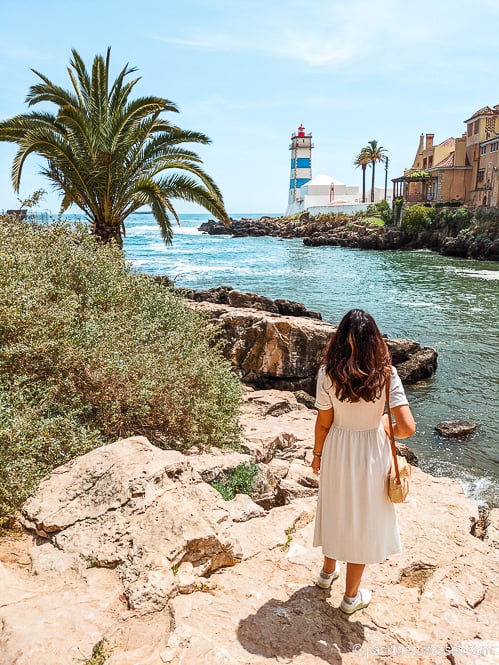
Cascais is a charming seaside town with arty/cultural vibes, flower-lined streets and loads of seafood restaurants. It’s one of the most popular day trips from Lisbon, as it’s only about 40 minutes on the train. But it’s a world away. And I think it’s also worth more than a day trip…
The royal family made Cascais their official summer residence in the 1870s. It’s retained its affluent nature to this day, being part of what tourist boards call the ‘Portuguese Riviera’. But it’s so much less touristy and in-your-face than the French and Italian versions, which is why I love it. Not to mention that it’s home to one of the prettiest views in the whole of Portugal: a little cove where you can look out to a charming stripy lighthouse, turquoise sea and palm trees. If that appeals to you, have a look at my large guide to things to do in Cascais. I recommend lots of lovely places to eat, things to see, shops and of course THAT photo spot with the lighthouse…
Looking for where to stay in Cascais? I recommend Suites Guest House, Villa Vasco de Gamma and Pergola Boutique Hotel.
Setúbal
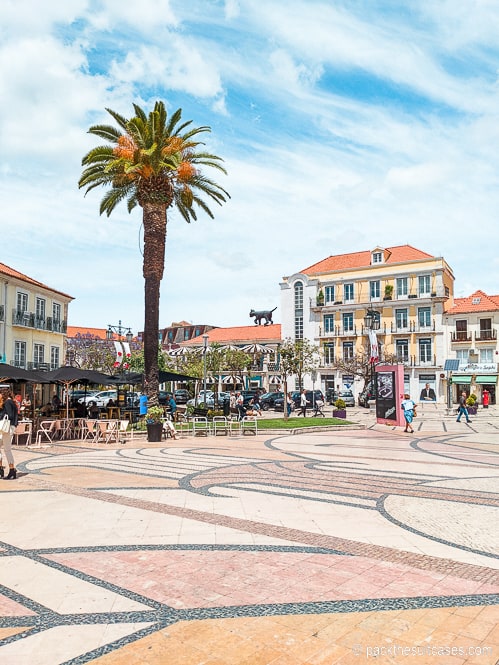
Setúbal is another of my favourite lesser-visited cities in Portugal. It’s a nice seaside city, friendly and walkable but not touristy. Although it’s an easy day trip from Lisbon, you could definitely stay for a weekend to explore and eat lots of chocos (fried cuttlefish; the local speciality).
Livramento Market is the heart of Setúbal’s foodie scene. It’s set in a beautiful Art Déco building and is an absolute treat to browse and eat at. I recommend Bloomy Market, a gorgeous veggie café inside the market hall. They do a beautifully cooked lunch using all fresh, local produce.
Stroll through the beautiful Praça do Bocage, keeping an eye out for the MASSIVE cat sculpture on the roof of the tourism office. Setúbal clearly appreciates the arts. Not only does it have sculptures throughout the city but the main square is named after the local poet Bocage. His statue watches over the square, with its unusual tile patterns, palm trees and colourful buildings. You can’t fail to spot Setubal’s town hall… It’s an absolute stonker: bright purple! I love it.
Look out for the colourful dolphin sculptures on the waterfront. They’re reminiscent of the ‘Lambananas’ we had all over Liverpool in the late ’00s, so I love them. They’re inspired by a much-loved local pod of dolphins who live just off the coast. You can go on a dolphin-watching boat tour to spot the real deals.
Looking for where to stay in Setúbal? Have a look at Hotel Cristal Setúbal or Melia Setúbal.
Guimarães – one of the best cities to visit in Portugal for history lovers
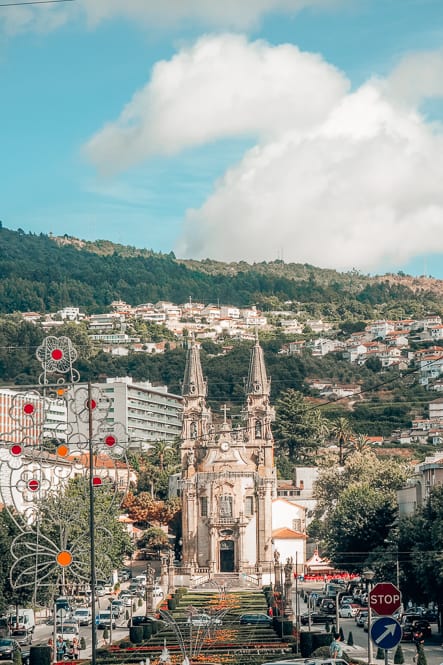
One of the many small and charming cities to visit in Portugal, Guimarães is a bit underrated considering it’s known as the ‘birthplace’ of the country. With its castle on a hilltop, myriad old churches and winding medieval cobbled streets, the city is straight out of a fairytale. Guimarães even has UNESCO World Heritage status. Yet you’ll find that it’s much, much quieter and calmer than other cities on the tourist trail. It’s a good idea for a day trip from bustling Porto.
Guimarães has a lovely historic centre, filled with tiled staircases, stone archways and winding alleyways where flowers overflow from window boxes. Sit in one of its cobbled squares and soak up the atmosphere before going to explore the castle. You should also get a cable car up Penha Mountain for views of the city and lush countryside around it. If all this medieval and mountain action is luring you in, have a look at my guide to Guimarães. It covers food, sights, shops and more.
Looking for where to stay in Guimaraes? I recommend Pousada Mosteiro de Guimaraes, Casa do Juncal and Hotel Toural.
Sintra
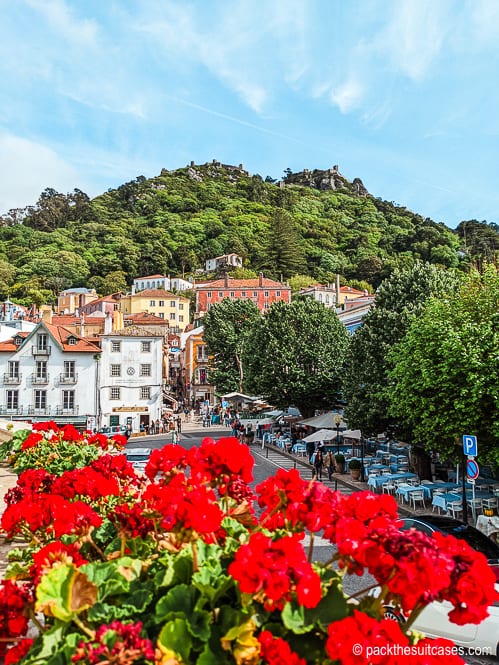
With its impressive palaces, lush mountains and cobbled streets, Sintra is straight from a fairy tale. A very busy fairy tale. Sintra has to be one of the most popular towns/cities to visit in Portugal. I’ve been a few times over the years and have never seen it anything but crowded. It’s such an easy day trip from Lisbon but you do need to bear in mind that it’ll be chokka.
If you’re only there for a day, start with the Palácio Nacional de Sintra, with its iconic twin conical turrets. This was the home of Portuguese royals until the early 20th century and they went wild with their interior design. Inside, you’ll find some of the most OTT azulejo ceilings ever, along with Moorish courtyards and opulent furnishings. Head up into the mountains to the Palácio da Pena, which is one of the most beautiful spots for photographers. The palace’s vibrant red and yellow hues stand out against the backdrop of green hills and blue skies. It has breathtaking views.
But my favourite attraction in Sintra has to be Quinta da Regaleira. This is a huge mansion and gardens. In the gardens, there’s a massive stone well with a spiral staircase inside, which you can walk down. Known as the ‘initiation well’, historians don’t really know what it was for. Ceremonial purposes? Tarot initiation rites? Ponder it yourself while walking down it (be prepared for a queue!).
Looking for where to stay in Sintra? Have a look at Quinta dos Lobos Boutique Hotel – Art & Nature Experience or Sintra Boutique Hotel.
The best cities and towns to visit in Portugal: other travel bloggers’ tips
Right, that’s the end of my bit. I’ll stop babbling on and hand it over to others. Here are the most beautiful towns and cities to visit in Portugal as suggested by other travel bloggers. Thanks very much to all the bloggers who kindly helped me out.
Lagos
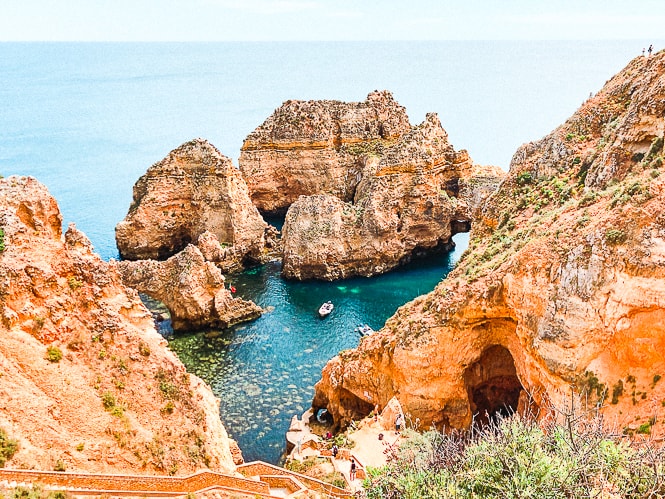
With thanks to Hannah from the travel blog That Adventurer.
Lagos is a pretty coastal town in the Algarve region. It’s an ideal place if you want to mix relaxation with culture and adventure. One of the best things to do is to explore Old Town Lagos. This part of the town has cobblestoned streets, whitewashed houses, colourful azulejo (tiles), beautiful churches and narrow alleyways full of delicious restaurants and cafés. Lagos is famous for fresh seafood so be sure to try Cataplana de Marisco, washed down with a glass of vinho verde.
Lagos also has lots of different beaches, both right by the town centre and a short distance away. Praia Dona Ana and Praia do Camilo are two of the most impressive. Here, you’ll get to enjoy turquoise waters and impressive views of the dramatic cliffs and rock formations. Visiting these areas at sunset is a must!
One of the best activities in Lagos is to rent a kayak or book a boat tour out to Ponta da Piedade. This is a series of beautiful sandstone cliffs where you’ll find natural caves and grottoes sculpted by the sea over thousands of years. While you can see some of the rock formations from the clifftop, exploring them from the water is definitely the way to get the best view.
Looking for where to stay in Lagos? I recommend Casa Margô or Lagos Avenida Hotel.
Coimbra
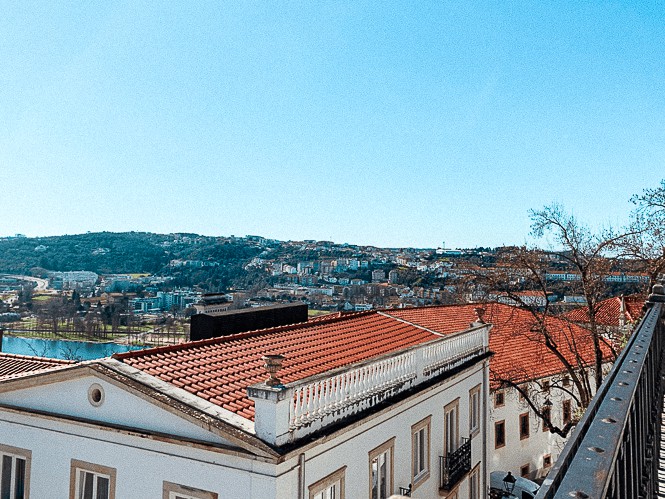
With thanks to Megan from the travel blog Traveller’s Exlir.
Coimbra, located in central Portugal, is a captivating hilltop city that blends history, culture and a vibrant student atmosphere.
Coimbra is famous for being home to one of the world’s oldest universities, the University of Coimbra, founded in 1290. Numerous notable buildings can be found throughout the campus, including the Paço das Escolas, which houses the renowned Joanine Library, and the University Tower, which offers panoramic views of the city.
One of the highlights of Coimbra is its rich heritage. This is showcased through historical wonders like the Joanine Library, the Old Cathedral and the ruins of the Monastery of Santa Clara-a-Velha.
The student population creates a lively atmosphere and visitors can enjoy cultural events, music festivals and nightlife. Coimbra actually has its own style of Fado music. It’s traditionally sung by male students in long black capes.
Spend some time strolling through the charming streets and squares of the old town and sampling traditional Portuguese cuisine in local cafés. Don’t miss regional specialities like Queijo da Serra.
Looking for where to stay in Coimbra? I recommend Sapientia Boutique Hotel or Hotel Quinta das Lagrimas – Small Luxury Hotels.
Aveiro
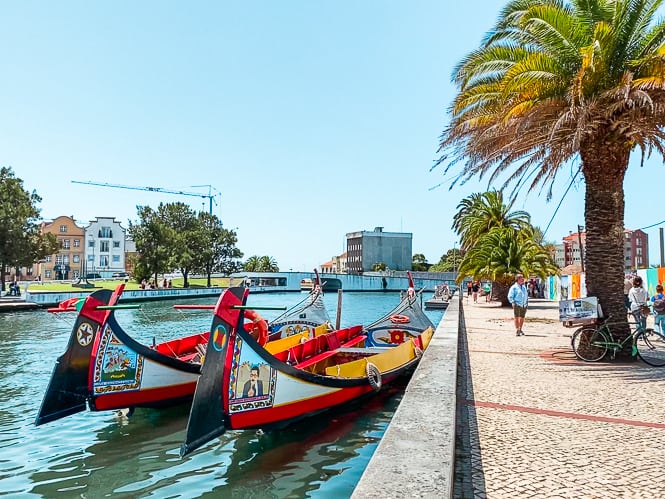
With thanks to Tina from the travel blog Veganderlust.
Known as Portugal’s Venice, Aveiro is a picturesque city about a one-hour train ride from Porto, making it a great day trip from there. Just like in the famous Italian city, the most popular thing to do in Aveiro is to take a boat ride on the canals. These take place in colourful Moliceiro boats. It’s a unique experience, worth doing even if you’ve already done a boat ride in Porto. And you don’t only get to see the canals and the beautiful city centre, you also get to learn about the history of Aveiro’s salt production.
One of the best restaurants in Aveiro is the vegetarian restaurant Green Point. It’s located near the (new) train station. Don’t miss the nearby old train station, which is worth seeing for the beautiful blue azulejo (tiles) that decorate its facade.
Another attraction is the striped houses in Costa Nova, a small beach town near Aveiro. The houses are along the beach and make the perfect background for holiday photos.
Looking for where to stay in Aveiro? I recommend Hotel das Salinas or Hotel Aveiro Center.
Viseu
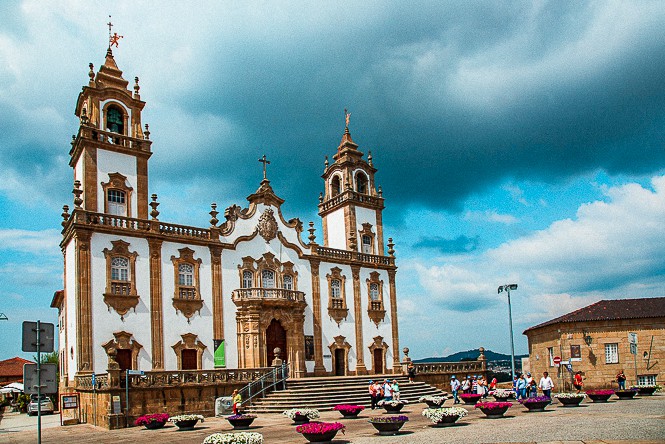
With thanks to Sarah from the travel blog Life Part 2 And Beyond.
Viseu is a hidden gem in Central Portugal, perfect for couples and solo travellers looking to escape the usual Portuguese tourist spots. Tucked between the Serra do Caramulo and Serra da Estrela mountains, this hilltop city offers an authentic experience and a romantic setting.
Take a leisurely walk through the historic centre, wandering down cobblestone streets surrounded by old walls dating back to the 15th century. Eventually, you’ll end up in Cathedral Square, where the impressive Viseu Cathedral stands. Step inside to find a surprisingly beautiful interior that contrasts with its plain exterior.
After a bite to eat in one of the tiny restaurants close to the cathedral, make your way to the stairs near Aquilino Ribeiro Park to the Baroque-style Igreja dos Terceiros. This church from the late 18th century is decorated with interesting azulejo that tell the story of St. Francis.
Nature lovers will enjoy Parque do Fontelo, a peaceful park once owned by the city’s bishops. Here, you can explore the Portal do Fontelo, a stone archway built in 1565, and the ruins of Saint Jeronimo’s chapel.
Looking for where to stay in Viseu? I recommend Pousada De Viseu or Avenida Boutique Hotel.
Viana do Castelo – one of the best cities to visit in Portugal for a relaxing break
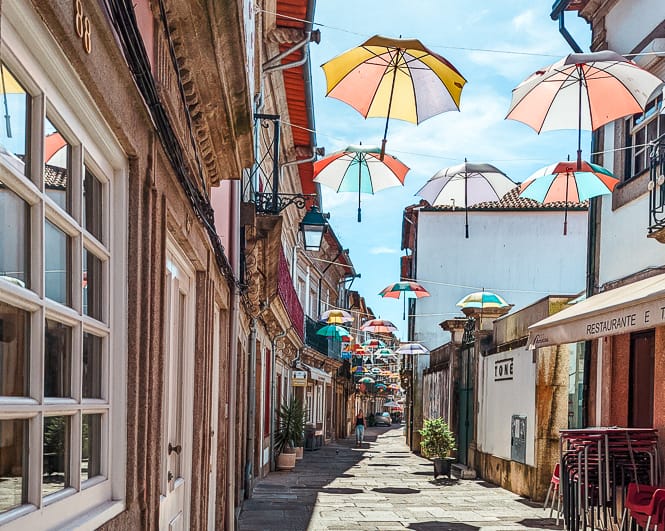
With thanks to Emily from the travel blog Pets Around The World.
Nestled in the north of Portugal, the charming city of Viana do Castelo will leave you enchanted. The city boasts a beautiful historic centre, with the water on one side creating a picturesque setting.
Viana do Castelo is overlooked by a mountain, with the Santuario de Santa Luzia Viana do Castelo perched on top, providing panoramic views of the city and surrounding areas. Take a funicular or, for the more adventurous, climb to the top of the mountain to enjoy this church and its spectacular views.
For those who love the outdoors, Viana do Castelo has beautiful beaches located just outside of the city. Take a leisurely stroll down the streets that are canopied by trees to reach the beaches, where you can enjoy playing in the white sand with your dog while soaking in the sun.
In addition to its natural beauty, Viana do Castelo is also a shopper’s paradise. It has a plethora of cute shops. Look out for souvenirs in the shape of the ‘heart of Portugal’, which is often found on jewellery.
Looking for where to stay in Viana do Castelo? I recommend Casa Melo Alvim – by Unlock Hotels or Pousada de Viana do Castelo .
Caldas da Rainha – one of the best cities to visit in Portugal to escape the crowds
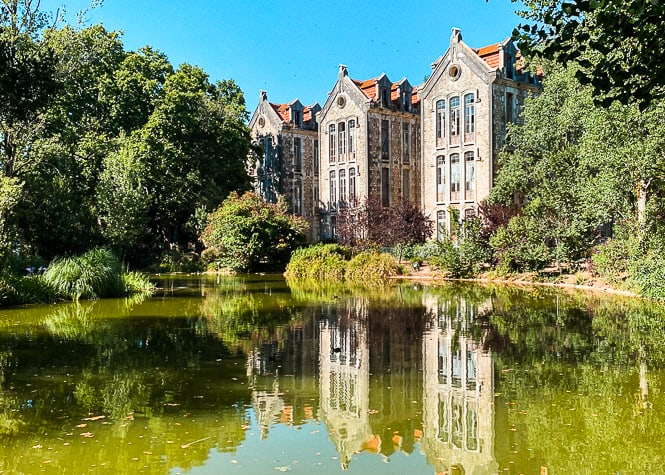
With thanks to Marga from the travel blog Discover Portugal.
Caldas da Rainha is a bit of a hidden gem on the Portuguese Silver Coast. Caldas da Rainha translates as ‘Queen’s Hot Springs’ or ‘Queen’s Baths’. This is after Queen Leonor, who also founded the Thermal Hospital in the city. The healing waters around town work wonders for rheumatism and arthritis, and it’s a fantastic place to enjoy a day of wellness.
Caldas da Rainha is also famous for its ceramics and pottery, and visiting the Ceramics Museum is a must. It’s located in a gorgeous building, and you’ll see art pieces such as tiles, statues and more. Also visit Loja da Fábrica, where you can find famous works by Rafael Bordallo Pinheiro. After some time sightseeing, take a moment to enjoy the attractive gardens of Parque Dom Carlos I. You can rent a little boat on the lake, enjoy the colourful flowers or visit one more museum, Museu José Malhoa.
Caldas da Rainha is located in a terrific area to settle for a few days. Within 15 minutes, you’ll reach some paradise beaches. Praia da Foz do Arelho and Praia de Rei Cortiço are stunning. Or head over to the coastal town of Peniche and make your way to the Berlengas Islands. If you prefer visiting towns, then Alcobaça, Batalha and Tomar are all within reach.
Looking for where to stay in Caldas da Rainha? I recommend 19 Tile Ceramic Concept or Minimalist Apartment In Caldas.
Ponta Delgada
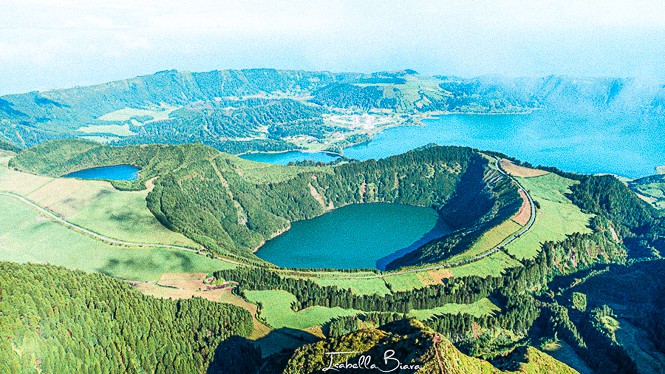
With thanks to Isabella from the travel blog Boundless Roads.
Ponta Delgada is the capital city of São Miguel, the main island of the Azores archipelago. Enjoy walking along the city’s famous calçadas, traditional mosaic pavements made of small, handcrafted stones, usually in black-and-white patterns. You can easily find your way around the historical centre, visit beautiful old churches and try some delicious local restaurants. Walk along the coastal promenade or to the pineapple farm, just 10 minutes from the centre.
Ponta Delgada’s marina is the departing point for many tours, including whale- and dolphin-watching tours. There, you’ll also find the very popular Piscinas de Pesqueiro. This a natural swimming pool in the sea, where locals and tourists alike swim in the cool waters and soak up the sun.
Ponta Delgada makes a great base for exploring the whole island of São Miguel. Rent a car and see the pretty town of Furnas with its popular hot springs, Terra Nostra gardens and the Calderas das Furnas nature reserve. You also can’t miss the iconic spot of Miraduro da Gruta do Inferno, with breathtaking views over four crater lakes. Walk around the twin lakes of Sete Cidades and head over to Mosteiros for an amazing sunset and a dip in the natural pools.
Looking for where to stay in Ponta Delgada? Have a look at Santa Clara 1828 or Senhora da Rosa, Tradition & Nature Hotel.
Óbidos – one of the best cities to visit in Portugal for festivals and events
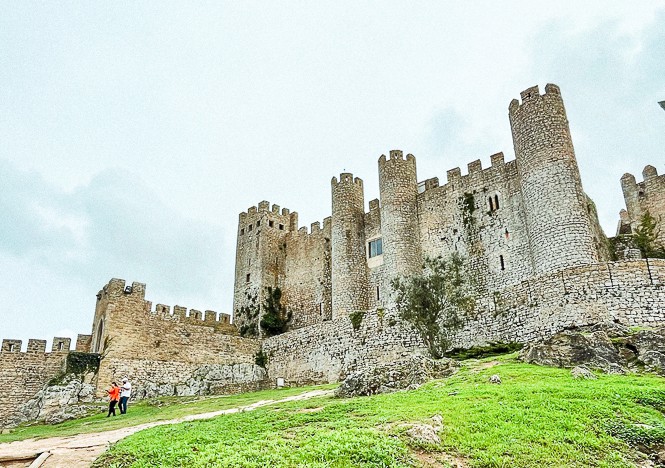
With thanks to Dan from the travel blog Honeymoon Always.
Óbidos is located quite close to Lisbon, making it a good day trip. It’s one of the most beautiful and well-preserved historic towns in Portugal. Medieval walls surround narrow cobbled streets, lined with white-washed houses.
The town’s main attraction is the medieval Óbidos Castle, which has been transformed into a luxury hotel. You can walk along the castle walls, which offer views of the town and the surrounding countryside. You can also find small restaurants inside the castle walls. Just outside, there is another group of restaurants, including À Janela and Avocado, which are worth a stop.
While in Óbidos, you have to try the famous cherry liqueur. It’s served in many shops in edible chocolate cups.
See if you can time your visit to attend one of the festivals in Óbidos. Each December, the town is decorated and transformed into the ‘Christmas Village’, with an ice-skating rink, carousel and Christmas market. In spring, there’s the International Chocolate Festival. There’s an array of chocolate-related activities, workshops, demonstrations and chocolate sculptures, and you can try various treats from local and international chocolatiers.
Looking for where to stay in Obidos? I recommend Pousada Castelo de Óbidos or Casa Senhoras Rainhas – Óbidos – by Unlock Hotels .
Nazaré
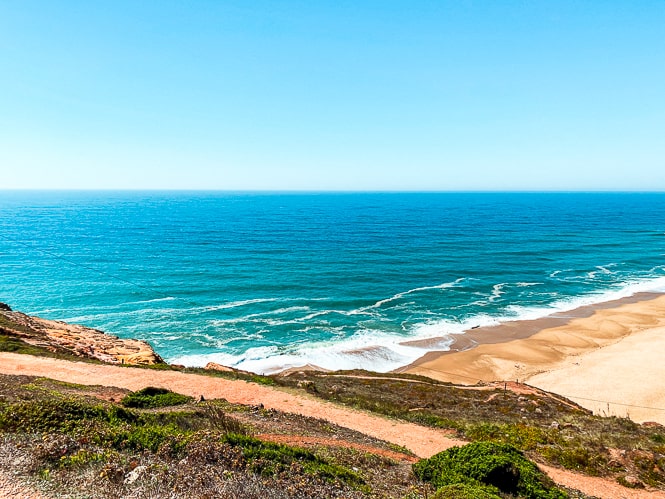
With thanks to Ella from the travel blog Many More Maps.
Nazaré is a popular beach holiday destination for the Portuguese, but it’s also a hit with international travellers – and it’s not because of the beaches. Nazaré is actually the home of the biggest waves ever surfed! Every autumn and winter, monster waves crash onto the shores, some reaching as high as 100 feet. The current record for the biggest wave ever surfed is held by a German surfer called Sebastian Steudtner, who surfed an 86-foot wave here. The guy who put Nazaré big-wave surfing on the map was a Hawaiian called Garrett McNamara, and he’s pretty much viewed as a god by the locals thanks to the huge tourism boost the big-wave surfing brought to the town.
To see the Nazaré big waves, you’ll have to visit the Nazaré Lighthouse, which is just slightly outside the town centre. From here, you’ll need to pay 1€ to get entry to the surf museum and viewing platform at the lighthouse. The museum has a fascinating collection of artefacts, including surfboards, and you’ll also learn why the waves there get so huge.
Aside from the waves, there are a few other things to do in Nazaré. You can head to Nazaré beach (the one that doesn’t have the huge waves), ride the funicular, and sample some of the town’s famous seafood at one of the many restaurants.
Looking for where to stay in Nazaré? I recommend Real Holidays Nazaré or Alojamento Batata.
Bragança
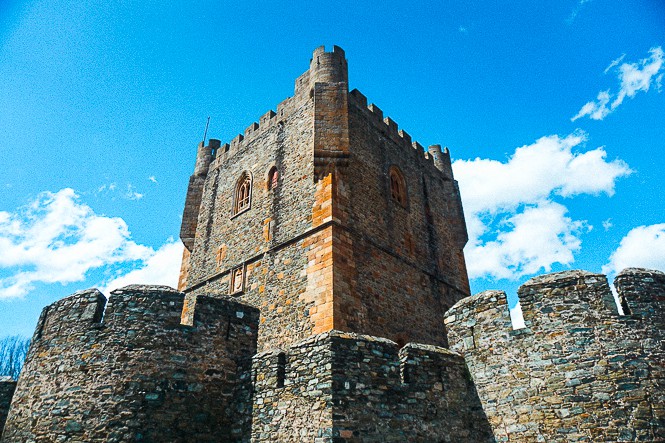
With thanks to Inês from the travel blog RandomTrip.
Braganza (Bragança in Portuguese) in northern Portugal is home to one of the most beautiful and well-preserved castles in the country. Walking through the centre of Braganza is walking through five centuries of history that take us back to the Bronze Age and the presence of Romans, Suevi and Visigoths. You’ll learn about the cultural traditions of the Trás-os-Montes region, like the famous caretos and their masks and costumes that invade the streets during carnival and winter festivals.
Don’t miss the art museum dedicated to the famous Portuguese contemporary artist Graça Morais. Bragança has five museums in just 300 metres of street. Guess the name of this street? Rua dos Museus, of course (Museum Street!).
When your legs start to be a bit tired, how about some delicious chestnut craft beer in Marron Oficina da Castanha? If you’ve never tried it, it’s a must! And if you’re hungry, try Taberna do Javali, right in front of Domus Municipalis and Church of Santa Maria for a modern approach to typical dishes, or Solar Bragançano for traditional transmontane food.
Looking for where to stay in Bragança? I recommend Solar de Santa Maria or Camoes StudioGeral.
Silves
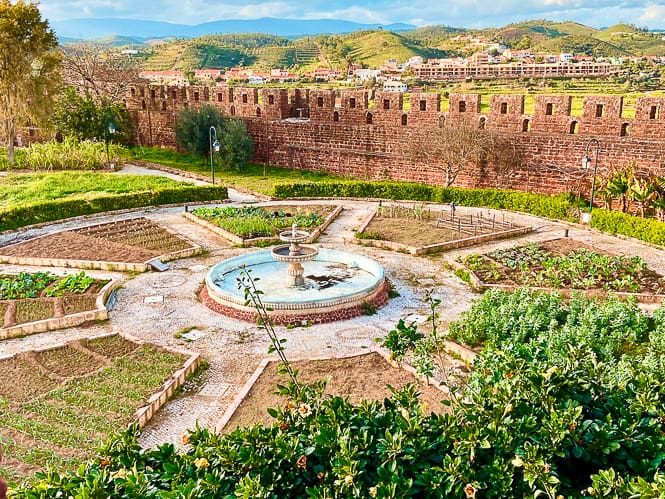
With thanks to Karen from the travel blog Outdoor Adventure Sampler.
Silves is in south-central Portugal, close to the Algarve region. The narrow cobbled streets, Arabic-influenced architecture and the castle on the hill make Silves one of the best towns to visit in Portugal.
Silves was the ancient capital of the Algarve. Many well-preserved historic sites from the era of the Moors’ occupation still remain. The Castle of Silves, located high on the hill of Castelo do Silves, provides panoramic views of the area. The white-washed and red brick Gothic cathedral is another interesting site to visit.
Open-air cafes and restaurants line the cobbled streets. A laid-back and unhurried vibe is prevalent as diners enjoy authentic Portuguese food. Several fine restaurants have outdoor dining in view of the Arcade River, which runs through town. You will be able to see the 14th-century Roman bridge and white storks nesting in trees along the river.
Silves is in a perfect place for day trips to sea kayak the Benagil Caves, visit the splendid Marinha Beach, or stroll through the orange groves and cork forests nearby. In August, a medieval festival features people in costume throughout the city. There is a medieval market and reenactments of battles.
Looking for where to stay in Silves? I recommend Casa Xonar or Casa Doce.
Évora
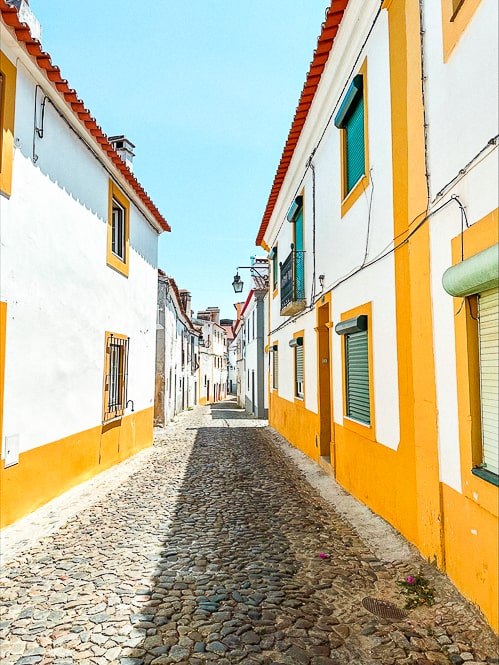
With thanks to Christine from the travel blog The Backpacking Executive.
Évora is a charming city in the Alentejo region of Portugal. Known for its well-preserved medieval architecture and cultural heritage, Évora offers visitors a unique blend of ancient and modern experiences.
One of the most visited places in Évora is the Sé Catedral de Évora. This grand cathedral, dating back to the 12th century, is a prime example of Gothic architecture. Its intricate design and the panoramic views from its tower make it a must-visit site. Visit one of the famous landmarks in Portugal, the Temple of Diana. This ancient Roman temple is remarkably well preserved and offers a glimpse into the city’s Roman past. If you want to experience something a little creepy, you may also drop by Igreja de São Francisco, referred to as the Bone Chapel. This chapel is lined with human bones and skulls. It was built in the 16th century as a reminder of the impermanence of life. Don’t miss the opportunity to savour the Alentejo cuisine. Try dishes like ‘Açorda’, a bread-based soup, as well as the excellent local wines.
Looking for where to stay in Évora? I recommend Templo Boutique Hotel or MouraSuites Hotel.
Fátima
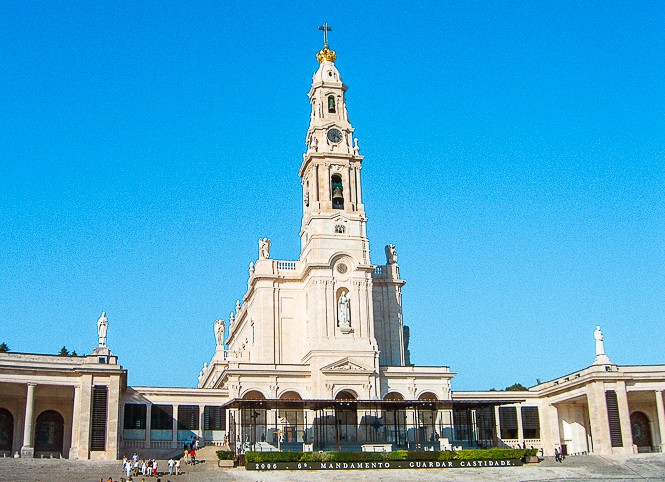
With thanks to Noel from the travel blog Visit Spain and the Mediterranean.
If you’re looking to explore more of Portugal north of Lisbon, you can consider Fátima. This is one of the most beautiful and important Catholic pilgrimage sites, with a fascinating history.
One of the most visited sites in Portugal, the Sanctuary of Our Lady of Fatima is also one of the largest Marian shrines in the world. It is said that the Lady of Fátima or the Virgin Mary appeared before three local children six times. She shared prophecies like the ending of World War I and a miracle dubbed the Miracle of the Sun. Every year in tribute, a large pilgrimage and procession are held in her honour around May to October on the 13th day of each month. You can visit the sanctuary, various churches and other public buildings around the holy site to learn more about the apparitions.
Looking for where to stay in Fátima? I recommend Mercure Fátima or Hotel Santa Maria.
The best cities and towns to visit in Portugal – useful information for your trip
Well done if you got to the end of the post – I know that was a lot of places to get through! Here are some general tips for visiting Portugal, whichever city or town you end up picking.
How to get around Portugal
Whenever I visit Portugal, I use the train network. I don’t really drive at home and absolutely hate it, so I never drive abroad. The fact you can get around all the best towns and cities in Portugal by train is one of the (many) reasons I adore the country. The train network is reliable and relatively cheap compared with other countries in Europe. Use cp.pt to book your train tickets.
In Porto and Lisbon, you can buy cards to make public transport cheaper over a period of time. There are urban rail systems and trams in both cities, as well as metro systems: Metro Lisboa and Metro do Porto, respectively.
When to go to Portugal
I always recommend doing anywhere in Portugal in the spring, early or late summer, or early autumn. I’ve experienced similar weather in both April and October (i.e. hot!) and both are times of year when flowers are out and most restaurants/bars are open. Do avoid the height of summer, though. It’ll be very busy with tourists, much hotter, more expensive to stay in hotels/apartments and too full of children due to school holidays.
Save and share: the best cities to visit in Portugal
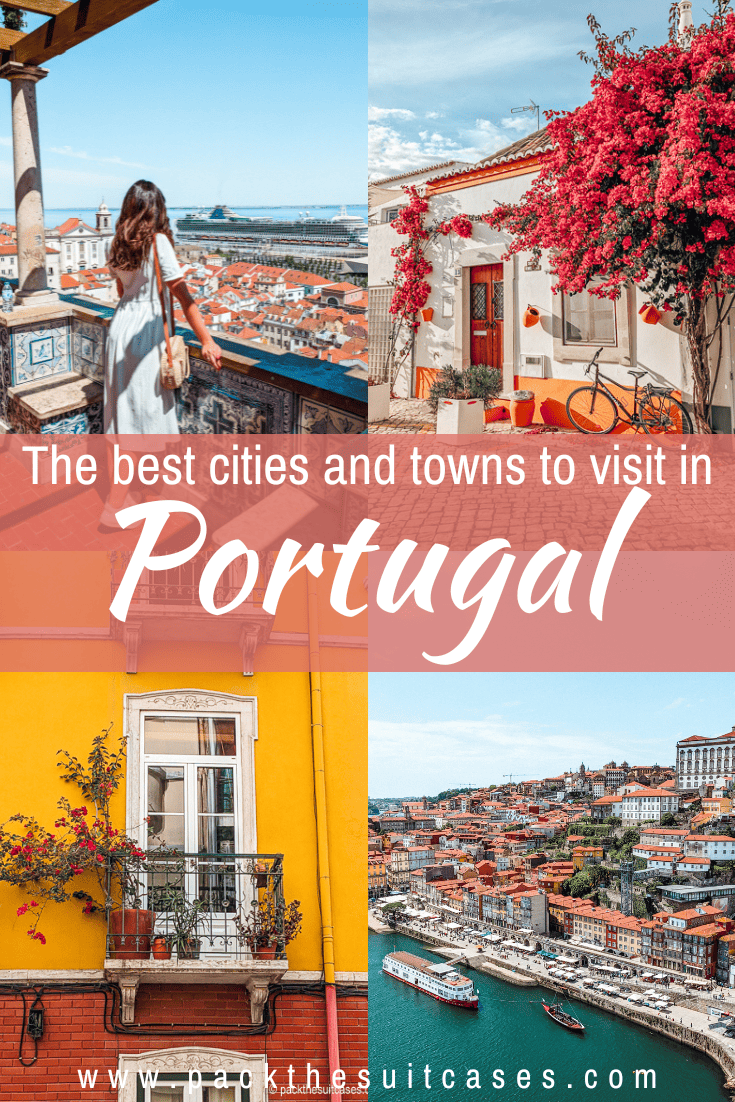
If you enjoyed this blog post on some of the best cities to visit in Portugal, why not pin it to your Pinterest board?
You might also like some of my other Portugal travel guides:
- 40 lovely things to do in Tavira, Algarve
- 17 things to do in Cascais, Portugal
- Where to eat in Tavira: the best restaurants and cafés
- 25 fabulous things to do in Faro, Algarve
- A guide to Fuseta, Portugal – an unspoilt fishing village in the Algarve
- A guide to Mértola, Portugal: a hidden hilltop gem
- 3 days in Porto: the perfect itinerary
- 10 beautiful day trips from Porto by train/bus
- 45 things to do in Funchal, Madeira
- The best restaurants in Madeira and Funchal
- The best bars in Madeira and Funchal
- A guide to spending a week in Madeira: a 7-day itinerary without a car
- The best beaches in Madeira and how to reach them.
If you’ve used one of my travel guides and enjoyed it, you can also buy me a drink. Cheers.

7 Comments
Have you been to Beija? It is a beautiful city with lots of art deco buildings.
Hi James, no not yet been to Beja! But it’s on the list (with about a million other places, of course!).
My husband grew up in Cascais, we need to visit sometime!
You need to read my guide to it 🙂 https://www.packthesuitcases.com/things-to-do-in-cascais-portugal/
If you had 21 days (end October through mid November, if it matters) how would you split up days for homebases to explore a solo adventure between Lisbon, Puerto, and Funchal?
Hiya,
We are in Lagos just now and happened upon your blog.
How super informative- we are off to Tavira by train later in the week!!
Thanks
Alan & Jeanette xx
Such a fantastic roundup of Portugal’s hidden gems! Sintra and Aveiro are already on my list, and now I’m tempted to add Óbidos too. This guide is super helpful for planning — just booked my Portugal visa from UK and can’t wait to explore these beautiful towns!